Why Moringa
Moringa
Moringa oleifera
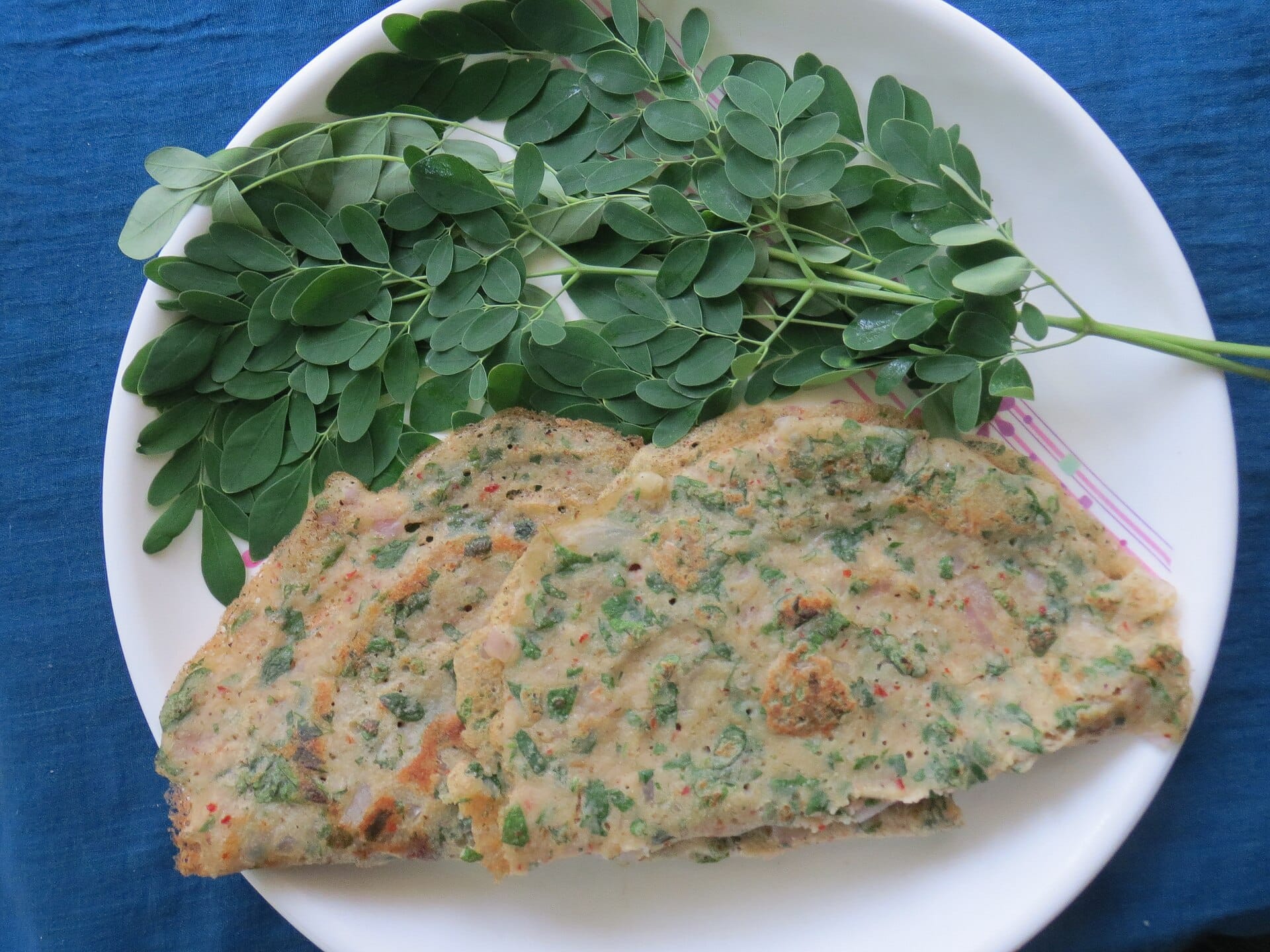
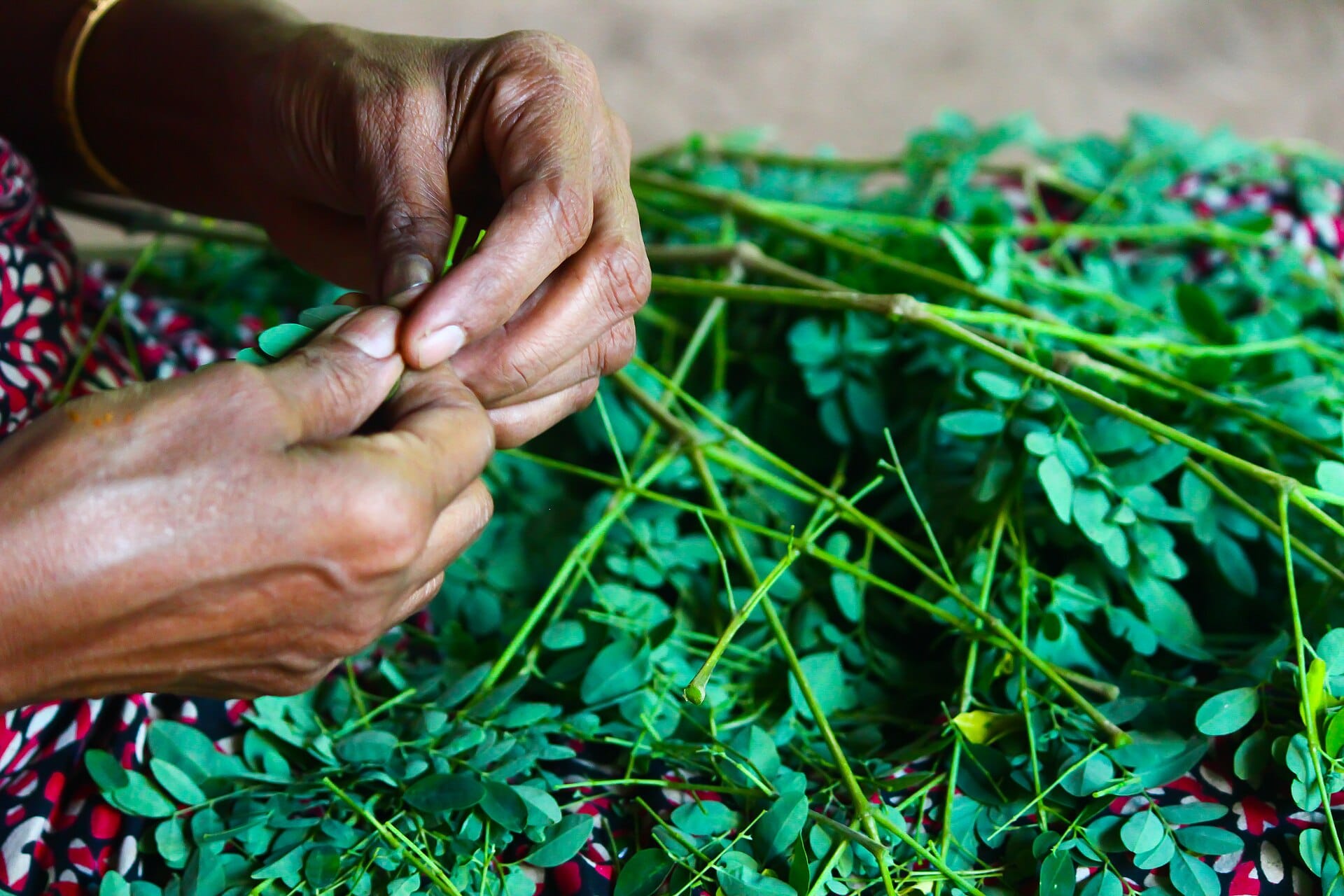
Moringa — sahjan or drumstick in Indian kitchens — is grown for its leaves and pods. Its leaves have long been eaten fresh, cooked or dried, and dried leaf powder brings them to the table all year.
What the leaf contains
- Vitamins A and CFresh moringa leaves contain vitamin A, as carotenoids, and vitamin C.
- MineralsThe leaves contain minerals including iron, calcium and potassium.
- Plant proteinThe leaves contain plant protein made up of a wide range of amino acids.
- Plant antioxidantsThe leaves contain polyphenols and flavonoids such as quercetin and kaempferol, which act as antioxidants.
How it is used
- An easy way to add leafy greens to everyday food — stir it into dal, sabzi, soups and chutneys, or knead it into roti and paratha dough.
- Mixes into smoothies, water or yogurt, as the suggested use on our pack describes.
- A dry powder keeps well: no washing, chopping or wilting, and the leaves are there in every season.
- A mild, earthy, spinach-like taste and a natural green colour.